Zany is probably a bit of a stretch for a "Great Idea". Zoology seems easy enough, and is represented at least once or twice is TGWttGB, so surprised Adler didn't grab it. Full disclosure, I'm not sure if this is going to be Zany at all, but I'm rolling with it.
Summary: Can't get the girl if you lie about your whole life story.
Bonus: Big hats!
Commentary: Something that's surprised me about TGWttGB compared to 5FSOB, despite reading 12 times as many pieces for the latter, I've found way more "old timey offensive" pieces in the former. N words and such all over the place. I don't harp on it, since it's a reality if you're reading a lot of stuff older than 100 years or so, but it's surprising how much more common it is in the newer set. (While both have works as far back as a couple thousand years, TGWttGB is a good 50 years newer than 5FSOB.)
"Gee whizz, craps amighty. There I was. What a chump I was to go and get gay up there in the West House bar, and just because that dude was standing there with a cane and that kind of a necktie on, to go and get all balled up and drink that whisky, just to show off."
1. Anderson (or his narrator) has a line earlier about learning how to swear right, but he never goes past "craps amighty" in the piece, which is amusing.
2. Dude as 20s slang is weird.
In the end, more "foolish" than "jester", but not a bad story. Some fun vernacular and style. 2/5 to close me out for the month. I'll do an overall reflection tomorrow, and then a couple days of loose ends for stuff I started in March or read this month but didn't feature. Then it's full Force ahead for Star Wars week on Sunday.
There's a lot of selections in TGWttGB about youth, aging, etc., but no Great Idea really. Kind of surprising.
Summary: Youth is wasted on the young.
Bonus: Meddling Kids!
Commentary: This starts with the oft repeated, "No young man believes he shall ever die." I'm not saying I didn't do anything reckless as a kid/teen, but I feel like I was aware of my mortality from a pretty young age. There were one or two times where I honestly thought I would die, and I think most people I've talked to felt similarly. Maybe it's more of a "don't understand what dying really means" kind of thing, but even that feels like a stretch. He continues with the equally cliché "death is part of what makes life worth living." Meh.
1/5 Short, cliché, and disposable. Dozens of other essays have covered the same ground, and covered it better. Cicero is in the same volume even.
I'm thankful for Scooby Doo: Mystery Incorporated. That's a great show!
Bonus: Tom Cruise totally looks like Artosis here.
Commentary:
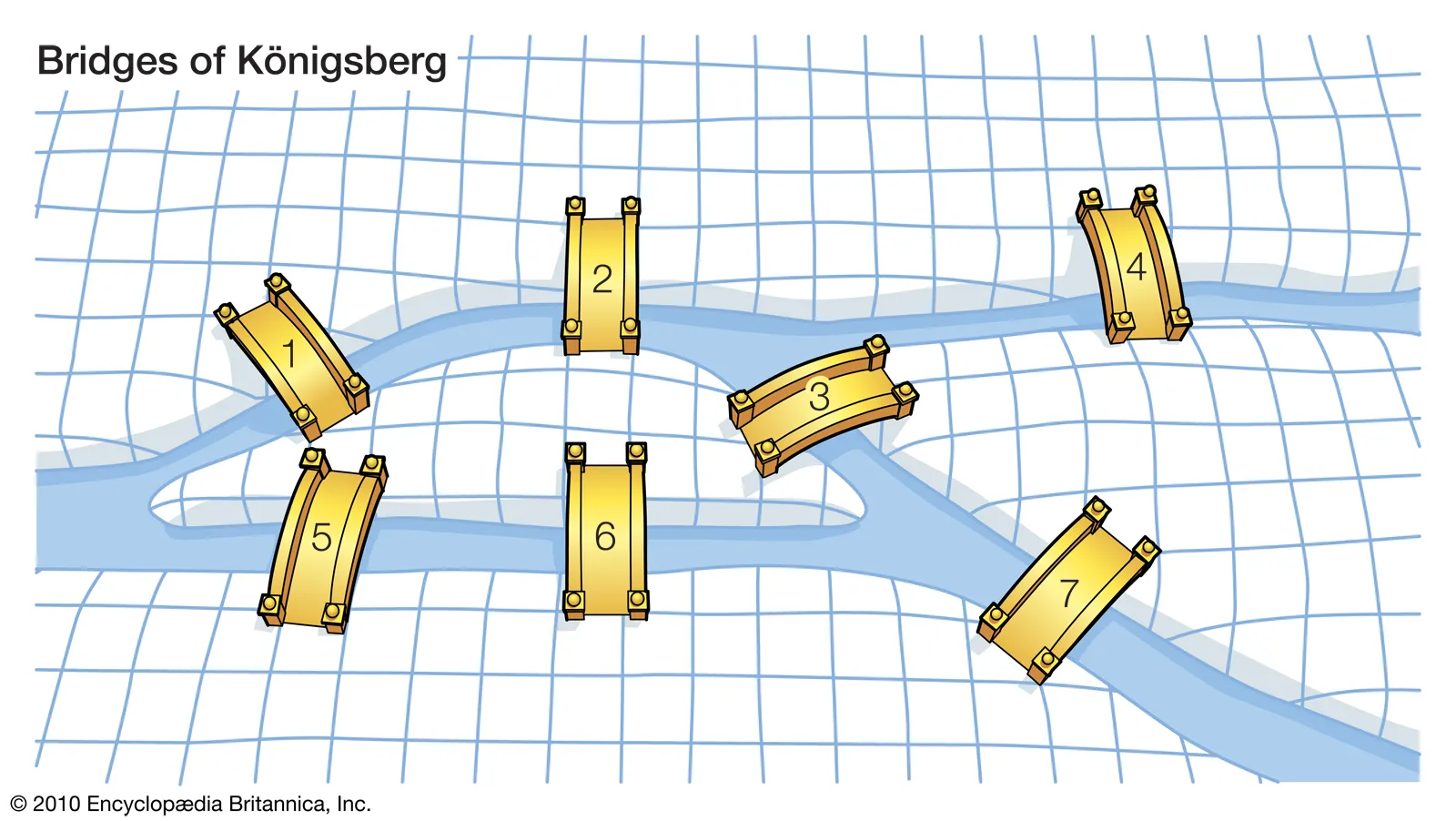
Problem: Can you cross all the bridges exactly once in one route?
Answer: No
If I understand Euler correctly, the short version of the solution is: You can't have anything other than 0 or 2 sections with an odd number of bridges for it to work. 3/5 I've heard of this problem before, and it was nice to see it well explained.
Short bonus today. Pretty good, about Fabre's attempt to acquire enough land to study nature (mostly insects) in his way. He's more interested in seeing them alive and at work than dissecting them and what not. Interesting piece, and I think it has merit. He makes the various insects sound pretty interesting, and I think it'd be good for any of us to go out into a park or back yard or whatever and go poke around in still alive nature a bit. The above quote is from Horus. It seems to be reasonably popular, but I'd never heard it before. Always fun to find the origins of these famous saying and what not. 3/5, go look at bugs.
I was thankful for going fishing with my dad today.
No other V Ideas. It kind of feels like Adler ran out of steam in some of these later ones. "I don't want to have to do an intro and catalog for both letters, I'll just make Virtue and Vice one entry. And X, Y, and Z don't need anything anyway.
Summary: Culture comes from curiosity. Or a desire for perfection. Or *ramble ramble ramble*...
Bonus: I'm sticking with curiosity.
Commentary: This one started great. Culture comes from charity is both inspiring and reasonably accurate. Most stories start with What if... and so many other advancements and both art and science stem from trying to figure something out.
It then moved into culture is the pursuit of perfection. That's not impossible to argue, but I think a weaker claim than the former. It then quickly transitions into religion is the best expression of culture, because it tries to get us closer to God's perfection, and turns to crap. I've spent an inordinate amount of words on the conflict between the incompatibility of traditional Christianity with a "liberal education" (people are good, intelligent, and can use reasoning and morals to figure out how to live life) viewpoint. Short version: Christianity says that we're all terrible, and need to beg for grace from the genocidal maniac that created mankind knowing we'd "fuck up" and have to punish us in an act of cosmic insurance fraud by sacrificing sort of himself to himself to redeem us to himself. And you're too dumb/bad to make sense of this, so stop trying.
Arnold improves again when he pivots off of Christianity (I'm not sure why that page or so even needed to be there) and back into the perfection scheme. He kinda-of/not really tries to draw distinctions between different types of perfection (internal, general, etc.)
I think the biggest flaw in this argument is illustrated when he starts talking about fashion, which is apparently constantly reaching for some Platonic Ideal of beauty. Maybe it's my colonial rugged individualism talking, but it seems like there will never be one perfect fashion. Tastes and environments can change, different fashions might work for different people (body type, etc.). Finding a universal fashion seems like it would require, at best, some sort of dystopian uniformity of everyone in terms of size, shape, color, etc.
Also, even as he pushes culture=greatness, he still slips into culture=curiosity. "What is greatness? -- culture makes us ask." CURIOSITY!
(He then gives a definition of greatness without backing it up.)
He sort of gets somewhere on materialism (just doing something isn't worthwhile if you don't value your work) but it comes across as more of a screed against valuing material accomplishments at all than making sure your goals and values align. I'd be pretty proud if I built a railroad.
Really, this is just a bunch of "conclusions" that he flies through quickly, each one "proving" the next one, without being proved itself. He loves Ben Franklin though, so that's good at least.
Rating: 2/5? This is a hard one. There's a couple real gems, but the overall piece is a mess. It's probably worth reading if you're trying to wrestle with what culture is, what a society should aspire to, etc., but not good enough to be required or taken as too strong an influence.
Summary: Students have to understand the purpose of math before they learn it.
Bonus: Two times!
Commentary: This is at least the second math essay (by different authors) I've read this month with a Hamlet reference. The he gets to Gulliver's Travels I've commented before about how it's so different to read this stuff from when the "canon" was a thing and everyone was expected to have a general foundation, as opposed to today where professors from different subjects openly scoff at each other, and students proudly avoid stepping out of their pet corner of their major as much as possible. (I'm sure there was some of that back then too, but it seems less dominant.) Likewise, the idea that you can figure out how to link math to weather to art, etc. as a student is very different from the modern, "you're an idiot who can barely read, shut up," that I got in college from most professors.
I agree with Northhead's thesis. I'm "good" at math, but damned if I wasn't lost for much of school, since it was basically presented as "Here's a list of formulas. No, we won't tell you which one goes with which problem. Now go fail the test, I can only give out 3 Bs this semester, and I'm saving them for the other section." I like the idea of moving from a physical concept (gravity, magnetism, the price of fish) to the equation, rather than the other way around.
Mathematics as a science commenced when first someone, probably a Greek, proved propositions about any things or about some things, without specification of definite particular things.
I dunno, it could've been a Mesopotamian or something.
Rating: 3/5 Put this (or something like it) at the beginning of math classes today.
I am thankful for having all this stuff explained to me.
Other T Ideas: Temperance, Theology, Truth, Tyranny and Despotism
Summary:
Bonus: Time flies like a arrow; fruit flies like a banana
Commentary: "The modern outlook on the physical world is not composed exclusively of conceptions which have arisen in the last twenty-five years." If I ever care to set up this blog enough that it needs a tagline, that might be it.
I also like that he immediately points out the inaccuracy in his card shuffling analogy:
If you take a pack of cards as it comes from the maker and shuffle it for a few minutes, all trace of the original systematic order disappears. The order will never come back however long you shuffle.
But still points out that it's a useful illustration. This then continues to an illustration of Humpty Dumpty being restored via trampoline, which is fun. He uses some other nursery rhyme-type sayings, not all of which I recognize, so I'll have to research those.
Also interesting, all the page numbers in any piece that has something like, "We shall consider the first condition immediately; the second must be deferred until p. 575." are updated to match the GWGB pages. That makes sense, but it's one of those editorial things I'd never considered before.
This was an interesting one, and kind of challenging. The language is simple enough, but the physics/philosophy/math (I'm sure there's a philosophical term for this that I don't know. It seems kind of like metaphysics, but not quite.) is a lot to wrap my head around. Definitely one I'd want to have a notepad with me to reread. (Notes on notes coming next week!)
I think this is the origin (or at least the right author and popularizer) of "Time's Arrow".
Remember: Time flies like an arrow; fruit flies like a banana.
I like his distinction between primary (possible) and secondary (plausible). It aligns with some other philosophy stuff I've appreciated (Rosseau?) about worrying about what can realistically effect you, not all the random philosophical what ifs and ideals.
I've always thought of entropy as "running out of" randomness, but I guess it's the opposite. I think in popular usage, it represents "as randomized as possible/matters", which is sort of the same thing. Eddington sort of gets there in a footnote, but will have to read more.
4/5: Interesting and enlightening. Gonna have to look up more Eddington to read.
"Measurement" was pretty good last week, so I'll give ol' Normie another shot.
S is also for (deep breath): Same and Other, Sense, Sign and Symbol, Sin, Slavery, Soul, Space, State
Summary: By combining math, you can make more math.
Bonus: A true classic!
Commentary: This one, maybe not so necessary. It deals with combining basic math rules to create more complicated ones. Some of it is interesting, but a lot of it starts to move into more niche stuff. Probably could've benefited from more tables/illustrations. 1/5: Nothing wrong with it, but not super interesting either.
Other R Ideas: Reasoning, Relation, Religion, Rhetoric
I was leaning more toward Reasoning or Rhetoric here, but the selections were pretty limited, and most were very short (one or two were very long) or already used for other letters (my own fault, could've planned better).
Summary: JOHN BROWN WAS SO GREAT!
Bonus: Historical Background:
Commentary: "I trust that you will pardon me for being here." Literally? Is this a speech? Or metaphorically in this writing? So many questions in sentence one. (It's a speech. I looked.)
Beyond that, I had a few of these sorts of pieces in 15MAD, "Look how awesome X was!" They were bad then, they're bad now. Rambly, disjointed, long on boasts and repetition, and short on specifics. Thoreau is possibly even more interested in insulting everyone else than he is puffing up Brown. He comes around a bit in the end, when he moves into trying to justify Brown's raid, but even then he keeps ranting about Brown's family and ignoring the other people with him. That's a choice, but especially a choice since some of them were fugitive slaves, which is kind of the whole point...
Summary: Great artists aren't crazy. You can tell, because of how real their work feels.
Bonus: Blood screen, so real!
Commentary:
"Sanity of True Genius" boils down (it's only ~3 pages) to "Good artists aren't crazy. At most, they might dip into a small amount of crazy from time to time to create their story/characters. You can tell that they're good/not crazy because their stories make sense/seem real." I think that's pretty fair. Always good to avoid romanticizing mental illness, and there's a lot to be said for a story that feels real. I'd argue that "feels real" is the key selling point for a lot of otherwise mediocre, but popular, stories (a lot of rat-fic and Gundam off the top of my head). Rating: 3/5. Good one. Really short.
I originally thought about trying to combine Quality and Quantity to cover both, but there are no Q readings in the Gateway.
Summary: Measuring is mostly figuring out how to count and order different objects by a specific property.
Bonus: You have to be able to count to be a Pinball Wizard
Commentary: In his intro, Campbell mentions, "that many sciences are 'mathematical'." I'm curious what sciences he's thinking of that don't involve math. Likewise, when he makes his potato example, he lists "cooking qualities" as non-measurable, but I'd say some of those (how long does it take to cook through if boiled, for example) are easy enough to measure. A lot of this treads similar ground to the "Definition of a Number" that I read earlier, but it's much more sensible, largely by differentiating between "number" and "numeral" (the symbol that represents a number).
He lays out three rules for numbers
1) two objects which are the same in respect of that property as some third object are the same as each other;
(2) by adding objects successively we must be able to make a standard series one member of which will be the same in respect of the property as any other object we want to measure;
(3) equals added to equals produce equal sums.
He says there's no way to arranging colors into a single order. Which is interesting, since Google tells me that the wavelengths for the colors had been discovered almost 80 years before he was born.
Rating: 3/5 This (maybe a slightly excerpted version) is a much better introduction to the concept of numbers than the one we read earlier. A worth edition to any classic essays collection.
Other P Ideas: Philosophy, Physics, Poetry, Principle, Progress, Prophecy, Prudence, Punishment
With 9 ideas (one of which is an And!) I believe this is tied with S for the most possibilities.
Summary: Classics within Classics
Bonus: I don't think I've ever actually seen an episode Wishbone:
Commentary: I usually preview the first page of several possible pieces for each day. I was pretty sure this was the one for today as soon as I read the opening paragraph.
Our judgments concerning the worth of things, big or little, depend on the feelings the things arouse in us. Where we judge a thing to be precious in consequence of the idea we frame of it, this is only because the idea is itself associated already with a feeling. If we were radically feelingless, and if ideas were the only things our mind could entertain, we should lose all our likes and dislikes at a stroke, and be unable to point to any one situation or experience in life more valuable or significant than any other.
My dislike of feelings being well established, I as both intrigued by the concept (we tend to judge things based on feelings and impressions, not objectively) and prepared to argue with the conclusion (if we had no feelings, we could still evaluate them based on some criteria. Shoutout to your 7th grade math teacher for teaching you unit rate.)
The rest of the first page goes into an "other people are as obsessed with their lives as you are with yours." I think it's interesting to see how often this was written about in the past, and it's come back, but I feel like it wasn't as popular philosophy/self-help truism for quite awhile in the mid to late 20th century.
Take our dogs and ourselves, connected as we are by a tie more intimate than most ties in this world; and yet, outside of that tie of friendly fondness, how insensible, each of us, to all that makes life significant for the other!—we to the rapture of bones under hedges, or smells of trees and lampposts, they to the delights of literature and art.
Clearly James isn't familiar with Wishbone.
I miss the old way of doing these with the Google Doc. There are a few places I want to put snarky little comments that aren't worth pasting into the blog.
After reading his rant about the "cove cabins" I'd like to hear James' opinions on glamping. I think part of his rant is sarcastic, but I'm not sure.
We get several bonus classics, in the form of excerpts from other authors. My favorite was one from Robert Louis Stevenson, about kids and bullseye lanterns. I'll have to read more of his stuff. I'll do one short pull from the almost 3 pages! that James uses, "For to miss the joy is to miss all."
I've written a lot about happiness, contentment, etc. this month. Something I appreciate in a lot of these readings is the emphasis on focusing on happiness. Not in an unreasonable way (the phrase "toxic positivity" strikes me as somewhat toxic itself), but simply on identifying how to be happy and trying to focus on cultivating that. Some of the sub-excerpts in here (and the piece as a whole) lean a bit more towards the latter, but the Stephenson one is solid. James (with some help from Richard Jefferies) almost makes me want to believe in passion. Almost...
Rating: 3/5 I don't agree with all the excerpts and conclusions here, but some of them are solid, and I appreciate the variety of viewpoints.
I am thankful for: Both pleasureful (which Blogger is convinced isn't a word) and painful things, in different ways. Without anything unpleasant it'd be hard to really appreciate the good stuff. Within reason. Not like, "I'm glad I broke my leg so I could run after it healed." More like, "It's worth it to do frustrating things, because then you feel more proud when you succeed."
Commentary: Coming into this blind, I remember reading about some guy who claimed he was emperor of California or something, so I'm hoping that's what it's about. (It's not.)
He was firmly convinced that he was fully entitled to rest, to pleasure, to prolonged and comfortable travel, and to not a little else besides. For such a conviction he had his reasons—that, in the first place, he was rich, and, in the second, that he was only now beginning to live, despite his eight and fifty years. Until now he had not lived, but had merely existed—not at all badly, it is true, but nevertheless, putting all his hopes on the future.
It's really easy to merely exist (not at all badly). I think it require a conscious, and sometimes exhausting, effort to avoid it.
Despite being almost half a century newer than T5FSOB, there are a lot more slurs in here.
I've written about this style a few times (it seems to have been more popular in the past) where this is less a story, and more a summary or story about a story. The family rushes from one place to another in paragraphs that give us some minor highlights, and then we're on to something else with little relation. It's a whirlwind world tour, in the most pointless possible way.
Two thirds of the way through the titular Gentleman dies, and the story shifts into a (very slightly) more concrete narrative. Not really worth waiting to get there though.
Summary: Happiness is good for people and society, and happens when you balance doing things you are interested in with rest.
Bonus: Someone made this, and that made them happy, and then they shared it with society, and that made society better.
Commentary: Hume starts by discussing luxury, whether it's good or bad, etc. He says:
But if a man reserve time sufficient for all laudable pursuits, and money sufficient for all generous purposes, he is free from every shadow of blame or reproach.
All pursuits and purposes is quite a bit. I assume he means more, "all he cares to engage in."
According to Hume: Happiness=action+pleasure+repose (sometimes indolence, but I think repose fits the context better). All are valuable, but all must be balanced. I don't know that I've ever read such a direct definition for happiness, but that seems pretty reasonable. You need both rest and to do things, and you should do them in a way that are pleasing. (Don't be one of those people who puts a ton of effort into a "hobby" that you really hate, or you won't be happy.)
He discusses how improvements in one arts tend to go with improvements in others. For example, a society with that has good manufacture will also have good science or ethics. He attributes this to a general spirit of development. I think this is something we saw during the pandemic. It didn't matter if you became a sourdough person or an interior decorator, or whatever, the people who did something did better (mentally) than the people who sat around mindlessly (as opposed to actively) streaming or playing video games or whatever.
Development in various arts also leads to socialness, since you need someone to talk about your science/crochet/gerbil breeding with. Makes sense. Improvement in the arts also tends to lead to a more liberal society, a freer government, etc., probably for the same reason. It also keeps the economy going.
In short, development in the arts (both "liberal" and "vulgar") helps to develop morals, society, general intelligence, and everything good about humanity. Even "vices" linked in some ways to arts are superior to those linked to mindless laziness: eg it's better to have an affair than to be a drunk. I've never really thought about it like that, but I think I'd agree. At least you're doing something/interacting when you have an affair. (Now, if you can become a drunken philosopher or kung fu master or something that's probably preferable to being a Lothario.)
Even in the 1700s, everyone looks down on Poland:
Poland seems the most defective in the arts of war as well as peace, mechanical as well as liberal; yet it is there that venality and corruption do most prevail.
Rating: 4/5 This one got a bit receptive in a few places (reusing similar examples) but the core message is interesting and makes sense. At under 10 pages, it's still a solid read even with the rambling. It presents a slightly different view than the earlier "On Contentment", but I think they generally agree that doing anything "productive" is overall good. This one focuses more on why society benefits from and should encourage happiness, while "OC" was more individual. Well worth considering.
I am thankful for having all my necessities? Kind of an awkward one.
Other M Ideas: Matter, Mechanics, Medicine, Memory and Imagination, Metaphysics, Mind, Monarchy
Summary: Numbers
Bonus: Trippy
Commentary: This is one of the popular choices for "first sci-fi story", and I'm starting a sci-fi unit in my classes next week, so I figured I'd give it a try. It's fairly pointless, and in large part consists of dick measuring contests between aliens over who is taller, who has more senses, etc. They work their way around to philosophy eventually, but mostly as a weak summary of the ancient Greeks.
1/5: I'm really not thrilled with the quality here compared to T5FSOB. Lots of stinkers in the two weeks I've been working it.
I'm thankful for math, since it lets us do just about everything.
I saw this selection showed up in two of tonight's words, and that seemed like a good enough excuse to read some more Hemmingway.
Other L Ideas: Labor, Language, Liberty, Logic, and Love
Summary: Two killers walk into a bar diner.
Bonus: Definitely taking the easy way out tonight.
Commentary: I did not realize this was going to be a Nick Adams story, and that was a fun little surprise. I think the highlight here for me is the dialogue between the titular killers, Max and Al. They sound just like a couple of assholes would today. "Your boyfriend", "bright boy", "girl friends", etc. Kind of a short selection, and not one I have a ton to say about. (I'll refrain from adding to the piles of scholarship on Hemmingway and the n-word tonight.) 2/5
I'm thankful for being alive, so I can do fun still like go to the botanical gardens.
A pair of Ben Franklin readings that're pretty short, even when combined.
Summary: Ben Franklin makes plans to form an academic Justice League and an academy of learning.
Bonus: Surprisingly, I can't find a video of "Liberal Arts Majors, Assemble!" or "By Your Powers Combined, I'm The Sciences!" or anything like that. So have some Big O (the dub's better.)
Commentary: My favorite part of the first selection (Ben Franklin creates a league of scientists in the colonies) is that he spends half of it arranging to use things that he's in charge of. "By permission of the Postmaster General." That's you, Ben Franklin. Likewise, putting the society in Philly in part because of the good library. Also you, Ben Franklin.
From the second selection, about starting an academy, I learned that "countenance" can mean "support", as well as "face". Please make use of this in your hoighty-toighty fantasy contracts. "The Spirits of Skullkeep shall countenance the Magus when summoned."
He wants the academy to help students find marriages after graduation. Better get some personals sections going in those alumni mags.
Beyond that, it's a reasonable if somewhat standard classical curriculum. He traces through the triv and quad, adds a few new things (gotta have that French), but there's little that hasn't been in any of the other readings on education I've featured. Total review: 2/5
Summary: God/Aristotle (same dif) says you need an Emperor
Bonus: (Why don't I ever embed these?) My preferred form of world government:
Commentary: Interestingly, after the other day's reading, Dante thinks it's pointless to try to teach people to be happy, since Aristotle already did it perfectly (Plutarch lived ~500 years after Aristotle).
Dante is very convinced that all civilizations should share the same main goal(s). This seems pretty questionable to me, but I was prepared to let him argue it out. He says that goal (borrowed from Aristotle) is "the ability to grow in intelligence." I certainly think that's a good goal (gestures towards blog), but I don't know that it's the ultimate end all-be-all of all civilization. If anything, it seems more like a goal that could be used to lead to other goals (better health, happiness, etc.) It might be a useful "metagoal" for accomplishing these things, but making it the prime-goal feels backwards to me.
His best route to this goal is universal peace. That seems reasonable enough. I guess you can make the "we discovered a lot of useful stuff via war" argument, but I think it's a stretch to say war is necessary (or even the most efficient) way to advance knowledge.
This is his basic reasoning for the need for world government. And, to be very clear, this is explicitly a top down "monarch or emperor" government. No world democratic council shenanigans here. (There are legislators in there somewhere, though.) State, local, etc. governments do remain intact, they just get very little say in things that aren't directly under them.
There's a lot of "obviously this is true" or "just read THE PHILOSOPHER (Aristotle)" across this whole essay, and not a lot of actual proving. (In addition to a bunch of "God wants world government.)
As someone who is broadly supportive of a more active world (or at least super-national) government, this essay is, if anything, making me support it less. He never really proves anything, just goes "Obviously a universal government will be the most just/freeing/etc. and then appeals to "purity"(mixing governments makes the impure!) and God. Broadly, I support what I call "hourglass government". Power should be concentrated locally (as the most directly affected by issues) and at the highest possible level (as the one with the broadest base of experience and resources) everything in between is just middle management to connect the two and should be minimized.
Rating: 1/5. I'm not offended, it's just bad. Dante is a proto-facist?
Commentary: This is largely a review of your middle school math vocabulary (domain, set, etc.) He does eventually get to what he claims is the definition of number:
"A number is anything which is the number of some class."
Russel admits this is somewhat circular, but attempts to justify it by explaining that you can't define "the class of fathers" without first defining father. Of course, he's doing the opposite here. He manages to sort of define "classes of numbers" as "The number of a class is the class of all those classes that are similar to it." The similar is making this a real fuzzy definition, but it's not completely circular. But you need to define number to define "class of number" not the other way around (just as you use father to define "class of father" not "class of father" to define father.)
For the sake of the blog, I looked up number in a couple different dictionaries (I even drug down the N volume of our encyclopedia). I think my favorite comes from wiktionary: An abstract entity used to describe quantity.
0/5 Pointless.
I'm grateful for the infinite combinations of words that I can read and write.